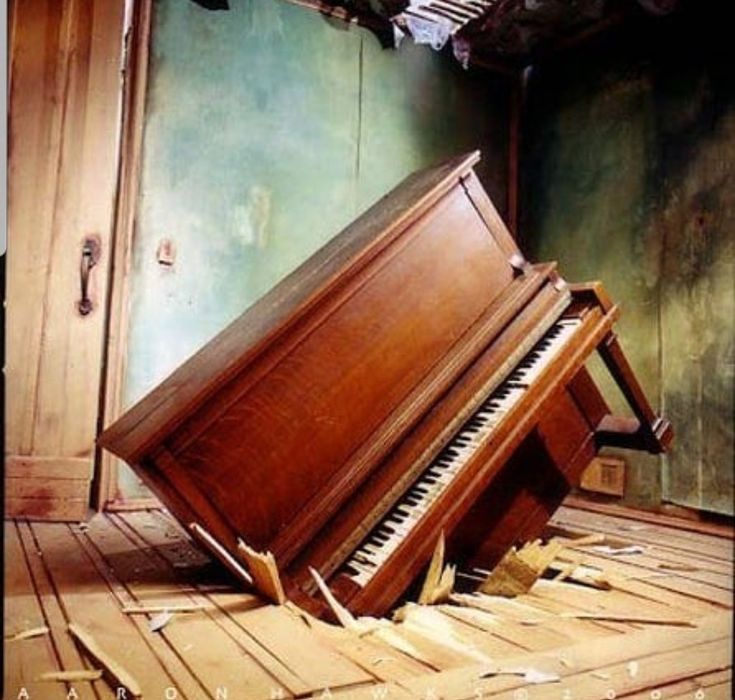
For many families, a piano is more than a piece of furniture. It holds years of practice, recitals, and memories. But when it’s time to move, downsize, or simply reclaim space, owners quickly discover a frustrating reality: donating a piano is far harder than expected. Even after trying to offer it for free on Facebook Marketplace
Unlike smaller musical instruments, pianos are large, heavy, and expensive to maintain. A typical upright piano can weigh 400–500 pounds, while grand pianos can weigh far more. Moving them requires professional equipment and trained movers, which makes organizations cautious about accepting donations. Even when someone wants to give a piano away for free, finding a home for it can feel nearly impossible.
Churches and school donations
Churches were once the most common destination for donated pianos, but many are now filled to capacity. Walk into the storage rooms of numerous congregations and you’ll often find several unused instruments already waiting for a purpose. Schools face similar limitations. Music programs usually accept only reputable brands that are in near-perfect condition because repairs and tuning can quickly exceed their budgets. If a piano needs work, most schools simply can’t justify taking it.
Second hand stores and thift shops
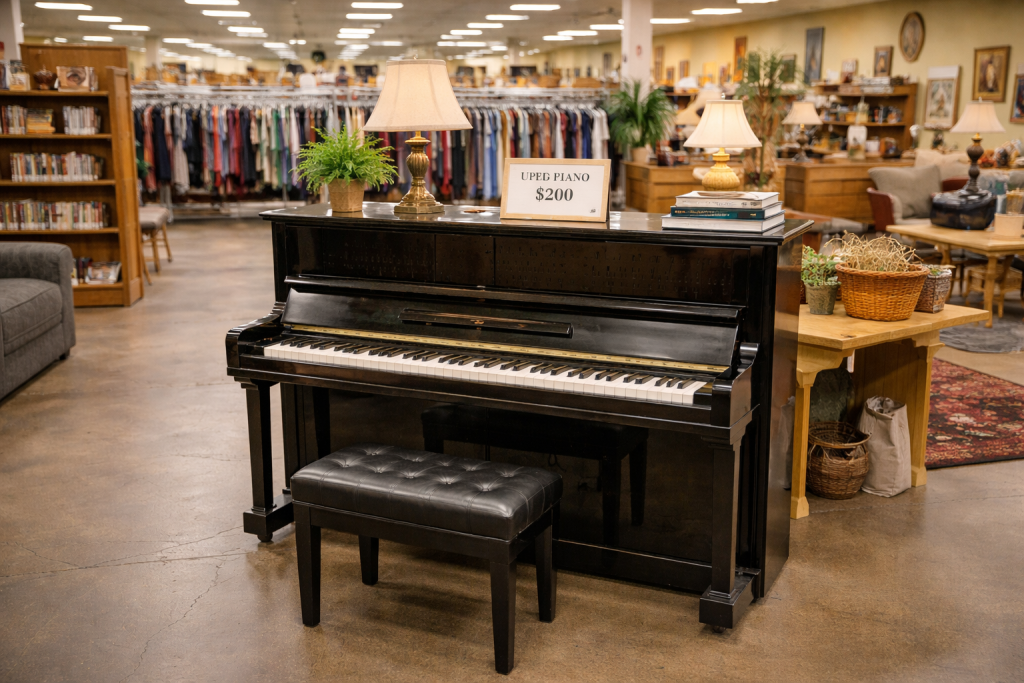
Second-hand stores and thrift shops used to be another option, but many have stopped accepting pianos altogether. The reasons are practical: they take up valuable floor space, they are difficult to move, and they may sit unsold for months. For resale shops that rely on fast turnover, a large instrument that might require repairs is simply too risky.
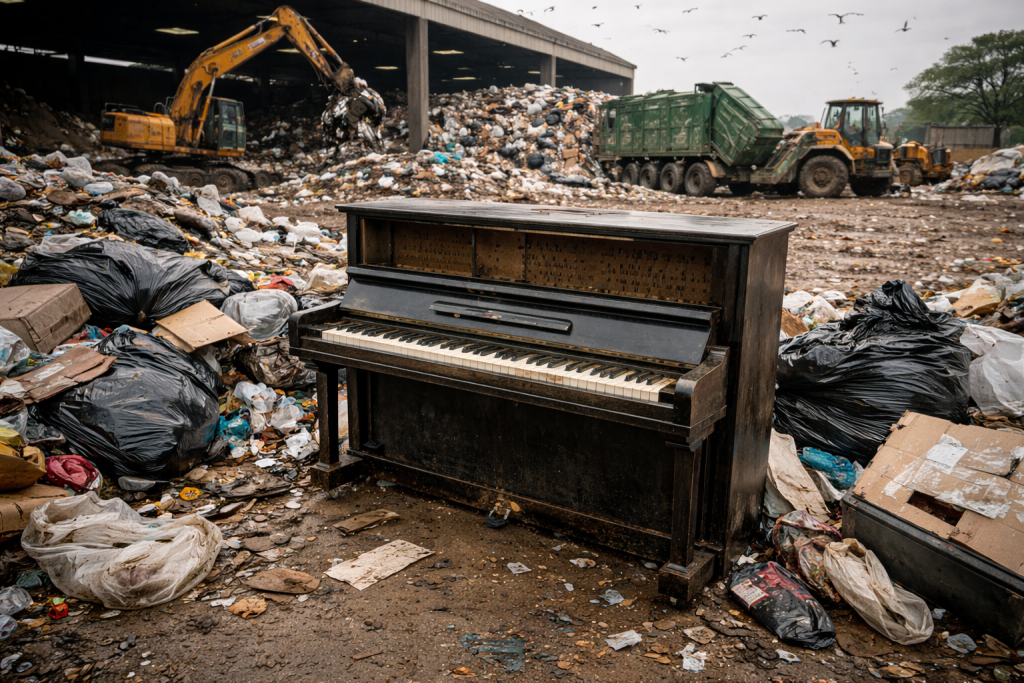
Is it ready for the disposal and the dump station?
As a result, thousands of perfectly usable pianos end up with no destination. Owners who hoped their instrument would continue making music are sometimes told their only option is disposal. Unfortunately, this often means sending a piano to the landfill. Considering the craftsmanship and materials involved, that outcome feels wasteful to many people.
Pianos are complex instruments built from hardwood, metal, felt, and carefully engineered components. Many older pianos were constructed to last for generations. Even when they no longer meet the expectations of professional musicians, they can still serve beginners and students for many years. The challenge is connecting these instruments with communities that need them.
International piano donation
One meaningful solution has emerged through international piano donation and recycling initiatives. Instead of discarding unwanted instruments, donated pianos are collected and shipped to regions where access to musical instruments is limited. In several programs, pianos are transported to Africa, where skilled technicians refurbish them and prepare them for new use.
The refurbishment process is often transformative. Technicians repair worn action parts, replace broken strings, regulate the keyboard, and tune the instrument back to playable condition. Cosmetic work may also be done so the piano looks as welcoming as it sounds. Instruments that might have been ignored or discarded are given a second life.

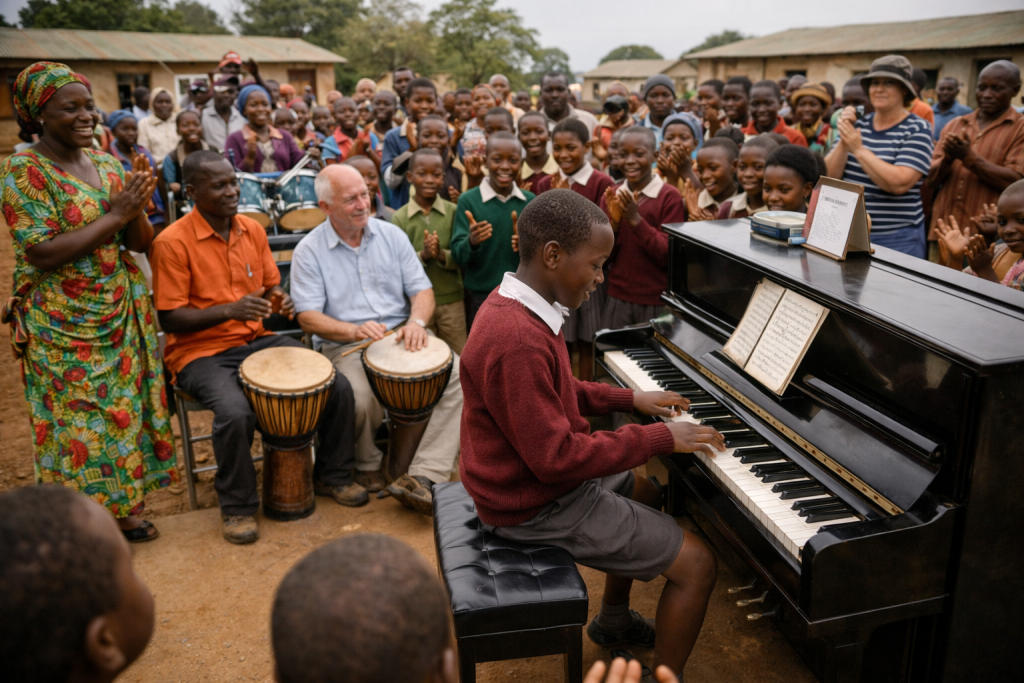
Once restored, these pianos are distributed to schools, community centers, churches, and youth programs. For many children, it is the first time they have ever had access to a real piano. Music teachers who previously relied on theory lessons alone can finally introduce hands-on instruction. Students who show talent can practice regularly, opening doors to artistic development and confidence.
The impact goes beyond music education. A piano can become a centerpiece for a community. It supports choir rehearsals, cultural events, and gatherings where people share songs and stories. In areas where resources are limited, a single instrument can inspire dozens of young musicians over many years.
From an environmental perspective, piano recycling also makes sense. Dumping a piano wastes large quantities of wood, metal, and craftsmanship that required significant resources to produce. Extending the instrument’s life reduces waste and honors the effort that went into building it. Repurposing an existing piano is far more sustainable than manufacturing a new one.
Of course, not every donated piano is suitable for shipping or restoration. Instruments that are severely damaged may still need to be dismantled and recycled for materials. But many pianos that are rejected locally still have plenty of potential when placed in a different context where the expectations and needs are different.
For piano owners, knowing their instrument will continue to bring music to others can be deeply meaningful. Instead of watching a piano hauled away as trash, donors become part of a story that extends across continents. Their instrument may end up in a classroom where a child discovers a lifelong love of music.
The difficulty of finding local donation options is real, but it doesn’t have to mean the end of a piano’s life. With creative recycling and international donation efforts, these instruments can continue fulfilling their original purpose: bringing music into people’s lives. And that outcome is far better than letting a piano’s final note be silence at the dump.